
Solar Energy for Property Developers - is it worth it?
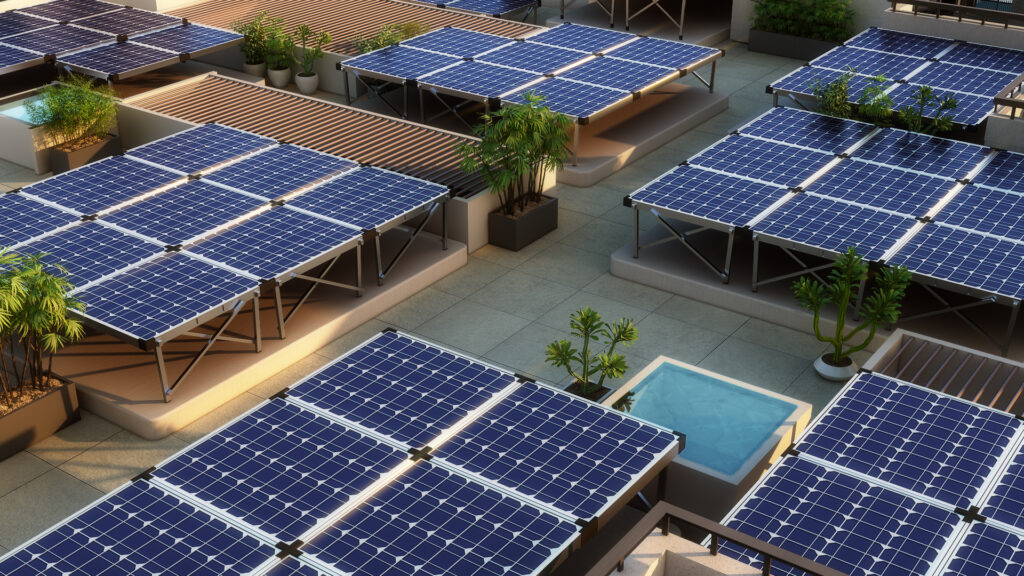
Solar Energy for Property Developers - is it worth it?
Why solar has shifted from “nice-to-have” to a development lever
For property developers, electricity is no longer a background operating cost; it has become a core design variable that influences project feasibility, tenant retention, valuation risk, and brand trust. In practical terms, grid uncertainty and tariff escalation have pulled energy strategy into the same decision tier as location, tenant mix, and capex planning. Recent determinations in South Africa underscore this pressure: the regulator approved electricity tariff increases of 8.76% in April 2026 and 8.83% in April 2027, reinforcing why long-term energy cost exposure is now a board-level topic for property portfolios. [1]
Solar PV changes the development equation because it can convert a portion of your future electricity purchases (which remain exposed to annual increases and supply constraints) into a long-life, on-site generating asset. Industry business-facing guidance has consistently framed the modern commercial solar proposition as “electricity at a lower effective unit cost over the asset life,” not merely “green energy.” For example, executive-facing analysis for businesses has argued that solar PV’s levelised cost can be materially below many retail tariffs, creating an immediate spread that strengthens the investment case—especially where midday load exists. [2]
For developers, the strategic value is broader than the electrical savings line item. Well-designed solar becomes a tool to: improve operational resilience, reduce tenant complaints and churn during outages, support rentability in energy-sensitive categories (retail refrigeration, medical, logistics), and improve the investability narrative for the asset. This is not theory: major property groups have publicly described structured feasibility processes and portfolio rollouts because rooftop PV has become financially viable and operationally aligned with asset strategy. [3]
What must be considered first before committing to solar
The difference between “a solar installation” and “a bankable energy asset” is the quality of the early decisions. Property developers should treat pre-feasibility as a disciplined gate, because the wrong early assumptions (especially about load, export, and roof constraints) are what produce disappointing returns later. Large property owners that roll solar out across portfolios typically start with precisely these fundamentals: consumption analysis, structural assessment, economic modelling, and formal technical approval processes. [4]
The most important first principle is load alignment. In most commercial property scenarios, solar value is strongest when generation is consumed on-site (or contractually allocated to tenants) during production hours. If your site has a daytime load profile (offices, retail, logistics operations, mixed-use common areas, refrigeration), you usually have the precondition for a strong solar business case. If the site is mostly nighttime load, the value case typically shifts toward storage, wheeling, or a different system architecture. GreenCape’s business-focused solar work has repeatedly emphasized that real economics depend on actual site consumption and tariff structure, not a generic “kWp estimate.” [5]
The second principle is tariff structure reality, not “average price per kWh.” Many commercial and industrial bills include demand-related components and time-of-use dynamics. That matters because solar alone often reduces energy charges, while batteries can additionally reduce peaks and manage expensive periods—if your tariff penalizes them. Executive guidance for decision-makers describes common storage use-cases in exactly these terms: peak reduction to avoid demand charges, load shifting for time-of-use, and backup power for supply interruptions. [6]
Third, developers must treat the roof (or carport) as engineered infrastructure. Structural capacity, waterproofing integrity, wind loading, access pathways, fire considerations, and long-term maintainability are not “post-design issues.” They determine whether solar becomes an asset or a liability. Portfolio owners that take solar seriously explicitly include structural roof assessments and formal oversight by appointed engineers as part of their project governance, precisely to protect the base building asset. [4]
Finally, do not ignore regulatory and grid-connection constraints. Export rules, metering requirements, and local approval processes can change project economics and timelines. Municipal embedded generation frameworks, for example, commonly require formal registration and compliant bi-directional metering for measurement of exported energy credits—illustrating why export value cannot be assumed without confirming the local rules that apply to a specific development. [7]
What a developer should expect to have in place to make the project “bankable”
A bankable solar project is one in which a lender, investor, insurer, and future buyer can all understand the assumptions, verify compliance, and trust the operational plan. That requires more than selecting modules and an inverter; it requires an asset-grade scope, documentation, and governance model.
At a minimum, developers should expect to have reliable baseline data before procurement: interval consumption data (or at least credible load profiling), a clear description of tenant versus landlord loads, and a defined operational objective (self-consumption reduction, demand management, resilience, wheeling, or a combination). GreenCape’s executive decision-maker guidance frames this as a process decision: choose the implementation approach (embedded generation vs. wheeling) and align the technical design, commercial contracts, and governance accordingly. [8]
Developers should also assume that the project will need a professional “building integration” layer: structural signoff where mounting interfaces with roof systems; electrical design that is compliant with the existing distribution architecture; protection coordination; isolation and safety design; and a commissioning standard that leaves an auditable record. The practical reason is simple—solar becomes part of the building’s life safety and insurance risk profile. Major property portfolios describe this explicitly: projects are reviewed internally, implemented under engineering oversight, and then governed under service-level agreements to ensure ongoing performance and compliance. [4]
Commercially, you need a clear ownership and revenue model. Developers often choose between (a) owning the plant (capex investment) and capturing savings, (b) contracting a solar lease/roof rental structure, or (c) a PPA/energy-services agreement where a third party owns the plant and sells electricity to the site. Executive guides aimed at business decision-makers outline these models because they materially change risk, balance sheet treatment, and payback experience. [9]
Where storage changes the developer business case and a reference to our BESS solutions
Solar PV solves a large part of the cost equation when your development has strong daytime demand, but storage often solves the developer’s “risk equation”: outage exposure, tenant continuity, peak penalties, and the gap between solar production and evening demand. In decision-maker terms, storage is less about “adding kWh” and more about adding control—controlling peaks on demand-based tariffs, controlling supply continuity for critical loads, and controlling how much of your solar generation is actually used on-site. That framing is consistent with executive guidance that defines storage use-cases primarily as peak shaving/demand charge avoidance, load shifting/time-of-use management, and backup power. [6]
From a performance and lifecycle perspective, developers should also treat maintainability and scalability as first-order requirements. In C&I contexts, modular high-voltage architectures are often preferred because they enable capacity growth, can reduce current-related losses, and support cleaner integration into hybrid systems (subject to the chosen inverter architecture and design standards). You do not want the storage system to be a “one-off special”; you want it to be an expandable building asset with a defined service approach. [10]
Reference paragraph: Our LIVOLTEK[11] commercial BESS offering includes modular high-voltage storage designed for expandable deployment. The BHF‑G platform, for example, is structured as a scalable system using 5.12 kWh battery packs, configurable up to 61.4 kWh per cluster (12 packs) and expandable up to 5 clusters (≈300 kWh), with an intelligent BMS described as providing equalization/balancing and multiple protection layers—features that align with the operational reality of C&I sites that scale over time and need predictable governance and safety controls. [12]
Payback expectations and what drives the timeline for developers
Property developers understandably want a single payback number, but experienced buyers treat payback as an output of a few dominant drivers: how much solar is self-consumed, the effective tariff avoided (including tariff structure), capex per installed kWp, financing cost, and the value assigned to resilience (avoided downtime, avoided diesel, reduced tenant churn).
That said, credible South African-focused sources do provide anchors for expectation setting. GreenCape’s business modelling has shown an approximate five-year payback for a 100 kWp commercial system, based on actual industry costs in their analysis, and their broader market intelligence has cited typical payback ranges (for similar C&I scale) in the mid-single digits depending on site conditions and tariff. [13]
More recent business commentary from Standard Bank[14] has argued that payback periods have improved materially as tariffs increased and project economics tightened—citing cases where PV-only payback can be under three years, and PV plus batteries can reach four to five years, depending on the customer and structure. This should be read as an illustration of best-case economics under strong conditions (high self-consumption, appropriate tariff structure, well-priced capex), not a universal promise—but it is directionally consistent with why property portfolios accelerated adoption. [15]
Earlier policy and research work also reinforces the same core message: payback is highly site- and tariff-dependent. A study on PV self-consumption in South Africa reported that commercial PV paybacks were often in the 6–10 year range in the conditions examined at the time, with the results strongly dependent on how PV value is recognized in local utility structures. The important developer takeaway is not the exact number from an older study; it is the caution that the “design + tariff + offtake assumptions” are what make or break payback. [16]
For developers, a practical rule is to run payback in tiers: (1) PV-only savings on landlord and common-area loads; (2) PV allocated to tenant offtake under a clear commercial mechanism; (3) storage value streams (peak shaving, time-of-use shifting, backup value). If your deal still works at Tier 1, you have a robust project. If it only works after you assume export credits or aggressive storage arbitrage, you need stronger diligence and more conservative guardrails. (This article is not tax, legal, or financial advice; involve your advisors for project-specific modelling and compliance decisions.) [17]
Insurance, maintenance, cleaning, and the costs that can surprise developers
A development-grade solar asset must be insured, maintained, and operated in a way that protects both the energy plant and the underlying building. The biggest mistakes in practice are not exotic engineering failures; they are governance failures—unclear maintenance responsibility, poor documentation, missing compliance records, and reactive servicing that allows small issues to become performance or safety problems.
On insurance, South African brokers and insurers commonly emphasize two practical requirements: the solar installation must be explicitly noted/specified in the policy, and coverage terms must be aligned with the risk profile of the system (including surge and damage conditions). Insurer-facing guidance also repeatedly stresses compliance: if an installation is non-compliant or deviates from manufacturer and legal requirements, claims risk being rejected—making “cheap shortcuts” a direct financial hazard. [18]
Maintenance should be budgeted as a lifecycle cost, not treated as an optional afterthought. International best-practice O&M guidance from the IEA PVPS[19] reports typical base O&M costs (including soiling mitigation) in the range of 6.5 to 16.5 €/kWp-year, with additional costs for advanced diagnostics depending on plant type and scope. The specific number for any development will vary by contract structure, monitoring sophistication, access constraints, and environment—but the core point is that professional O&M is a known, quantifiable requirement for protecting yield and availability. [20]
Cleaning is not cosmetic; it is yield protection. Soiling has been identified as a major driver of underperformance globally: a fact sheet from IEA PVPS reports average global energy losses from soiling of about 4–7%, with real financial impact and site-specific variability. Developers should therefore view cleaning strategy as a designed part of O&M: design for safe access, specify cleaning responsibilities in contracts, and use monitoring data to avoid pointless cleaning cycles while still protecting yield where soiling is significant. [21]
Finally, sophisticated property owners treat performance governance as a contractual discipline. A strikingly transferable example: a major property group’s public ESG reporting describes how performance is governed through formal service-level agreements with installers after commissioning, paired with oversight and regulatory compliance processes. That mindset is exactly what developers should replicate: build O&M obligations, response times, documentation, and warranty handling into the project structure from day one. [4]
Proof in the market: South African property developers who have already committed to solar
If solar were truly marginal for developers, we would not see sustained portfolio-scale rollouts by listed property owners and development-focused REITs. The South African market now provides multiple public examples of developers treating solar (and increasingly storage) as a strategic asset.
Growthpoint Properties[22] has a long public track record of rooftop PV deployment across its portfolio and has reported continued additions and governance processes around solar feasibility, engineering oversight, and service-level performance management. It has also publicly advanced solar-plus-battery initiatives for resilience; for example, industry reporting described a major solar-charged battery deployment at a mall as part of a broader energy security strategy, illustrating that storage is being adopted where resilience and continuity matter. [23]
Redefine Properties[24] has publicly communicated a significant rooftop solar footprint and ongoing expansion plans, including high-profile projects tied to wheeling arrangements and large rooftop installations. Public reporting and company communications have referenced substantial installed PV capacity and specific large rooftop deployments, reinforcing that solar is being pursued not only for ESG signalling but for business resilience and cost control across a national portfolio. [25]
Fortress Real Estate Investments[26] has likewise disclosed a multi-installation solar PV programme across its portfolio and has marked output milestones from that strategy, indicating sustained rollout and meaningful generation at scale rather than pilot-only activity. This type of programme is especially relevant for developers because it reflects repeatability: standardized feasibility, standardized contracting, and portfolio learning curves that reduce execution risk over time. [27]
Spear REIT[28] has also communicated a deliberate solar strategy across its portfolio, reinforcing that even mid-cap property groups are treating PV as a portfolio operating lever rather than an isolated project. [29]
Equites Property Fund[30] positions “access to solar PV systems” as part of its logistics property standard and has disclosed portfolio-level indicators tied to installed solar PV, signaling that solar is being integrated into modern industrial/logistics development expectations. [31]
Is it worth it? The developer-grade conclusion
For property developers, solar is “worth it” when it is treated as asset infrastructure, not as a once-off contractor package. The financial case is often compelling under the right conditions: reputable modelling has shown ~5-year payback in C&I contexts, while newer business commentary suggests even faster returns for high-quality sites with strong load alignment and well-priced capex. Meanwhile, the strategic case strengthens as tariff pressure and supply uncertainty persist, because solar and storage reduce exposure to external volatility. [32]
The most defensible developer decision framework is therefore not “solar or no solar,” but: what scope, what structure, and what governance. Developers who win with solar tend to do a few consistent things: they run rigorous feasibility (load, structural, tariff, regulatory), they choose equipment and EPC partners with defensible warranties and auditable compliance, and they lock performance accountability into service-level agreements and monitoring—an approach explicitly reflected in portfolio-scale property reporting on how solar is assessed, approved, and managed after installation. [4]
When solar is delivered with that level of professionalism, it stops being a speculative add-on and becomes a durable development advantage: lower operating cost exposure, stronger resilience, better tenant experience, and a more investable asset story—proven by the fact that major South African property groups are already deploying it at scale rather than debating whether it belongs in the toolkit. [33]
[1] South African regulator says Eskom can increase charges more than previously approved
[2] [15] Big energy savings: the business case for solar investment
[3] [4] [11] [22] [23] 2025-Environmental-Social-and-Governance-Report. ...
[5] [13] [14] [26] [32] Solar PV for businesses
https://greencape.co.za/assets/Uploads/Industry-Brief-Solar-PV-FINAL-WEB-Update2.pdf
[6] [8] [19] [24] Executive decision-maker's guide to investing in renewable ...
[7] [30] Microsoft Word - Schedule 2 Electricity Tariffs 2025-26.
https://www.ekurhuleni.gov.za/wp-content/uploads/2025/06/Schedule-2-Electricity-Tariffs-2025-26.pdf
[9] CEO's Guide to Going Solar - Cape Town
https://www.wesgro.co.za/uploads/files/CEOs-Guide-to-going-Solar_July-2023.pdf
[10] [12] High-Voltage Battery System_BHF-G15~60
https://www.livoltek.com/product/bhf-g15-60kwh/
[16] Consumer savings through solar PV self-consumption in ...
[17] Guide on the Allowances and Deductions Relating to ...
[18] Insuring Solar Installations - Garrun ...
https://www.garrun-group.co.za/shedding-light-on-solar/
[20] Guidelines for Operation and Maintenance of Photovoltaic ...
https://iea-pvps.org/wp-content/uploads/2022/11/IEA-PVPS-Report-T13-25-2022-OandM-Guidelines.pdf
[21] Fact Sheet: Understanding, Measuring, and Mitigating ...
https://iea-pvps.org/fact-sheets/fs-soiling-losses/
[25] Redefine properties doubles down on esg initiatives to ...
[27] Fortress Real Estate Investments Limited
https://fortressfund.co.za/about/our-impact
https://growthpoint.co.za/esg/sustainability
[29] Spear REIT's solar strategy gives its property portfolio a ...
https://spearprop.co.za/spear-reits-solar-strategy
[31] Logistics Real Estate Investment Trust in South Africa & the UK