
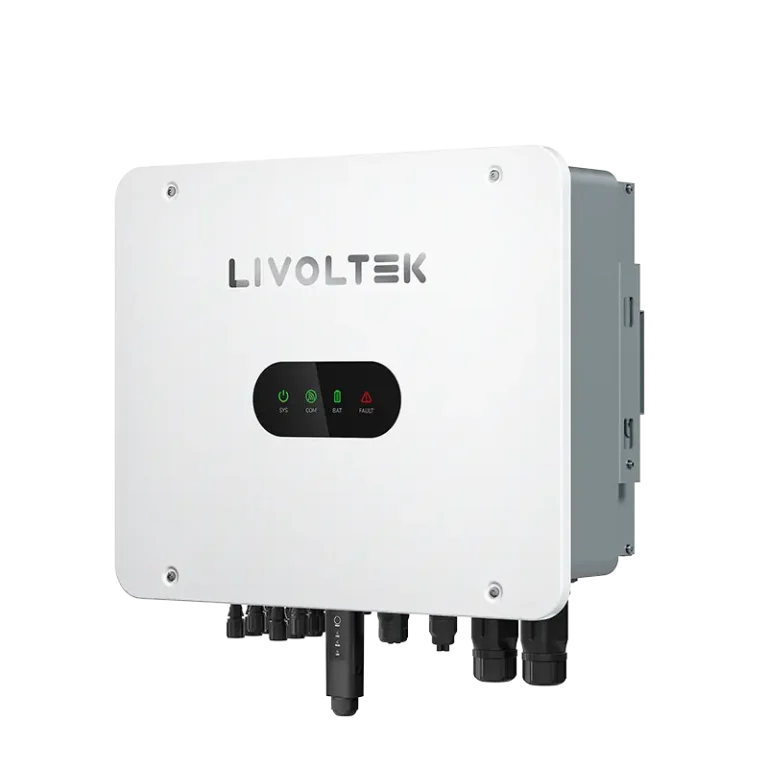
Livoltek HP3 15–30kW Three-Phase Hybrid Solar Inverter | 3 MPPT, Battery Storage, Scalable Parallel
The Livoltek HP3 T2 series offers 15–30kW three-phase hybrid inverter capability with 3 MPPT trackers, high-voltage battery compatibility, scalable parallel operation, built-in EMS for optimised self-consumption, and seamless backup power — a flexible energy storage solution for homes and businesses.
Key Features
- 3 independent MPPT trackers for multi-orientation solar arrays
- High-voltage lithium battery compatibility with built-in EMS
- Scalable parallel operation for expanded system capacity
- Seamless grid-to-backup switchover for uninterrupted power
- DC and AC coupling support for new builds and retrofits
- Peak-shaving and self-consumption optimisation modes
- Type II AC & DC SPD for surge protection
- Optional AFCI for fire safety
- Remote monitoring and firmware updates via Livoltek cloud
- Intelligent 24/7 scheduling for optimised energy flows
Technical Specifications
| Protection Rating | IP65 |
| Max. Efficiency | ≥97.8% |
| MPPT Trackers | 3 |
| Phase | Three-phase |
| Battery Type | High-voltage lithium |
| Power Range | 14.9kW / 15kW / 20kW / 25kW / 29.9kW / 30kW |
Overview
The Livoltek HP3 15–30kW T2 series sits at the heart of medium- to large-scale residential and commercial energy storage systems. Featuring three independent MPPT trackers, this three-phase hybrid inverter efficiently harvests solar energy across different roof planes while simultaneously managing battery charge/discharge cycles through its built-in Energy Management System (EMS).
Designed for scalability, the HP3 T2 supports parallel operation for expanded capacity, accommodates high-voltage lithium battery systems, and provides seamless grid-to-backup switchover for uninterrupted power during outages. Its flexible DC and AC coupling options make it equally suitable for new solar-plus-storage installations and retrofit projects that add battery storage to existing PV arrays.
Intelligent scheduling, peak-shaving, and self-consumption optimisation modes help end-users minimise electricity bills and maximise energy independence. Advanced safety features including Type II SPD, optional AFCI, and comprehensive protection protocols ensure reliable, long-term operation in diverse climatic conditions.