
ERS Microgrid Case Study: Low-Voltage Solar Storage EPC Project
BHF-G15~60_G2-black version.pdf
975.7 KB
Microgrid Case Study: Eswatini Revenue Service Low-Voltage Solar & Storage EPC Project
Why this project matters in Eswatini’s power context
In the Kingdom of Eswatini[2], grid reliability and energy security are recurring strategic concerns. Nationally, domestic generation capacity is limited, and the country relies heavily on imported electricity—reported as “over 80%” in a recent policy brief—making customers vulnerable to supply disruptions and price volatility. [3]
At the utility level, Eswatini Electricity Company[4] operates hydropower assets totaling 60.4 MW (reported as meeting about 15–17% of the country’s energy needs in the same policy brief), while additional Independent Power Producer capacity contributes around 110 MW; the remaining electricity is imported (including from South Africa and occasionally Mozambique). [5]
Reliability challenges are not just theoretical. A national research paper assessing outage impacts describes electricity supply as unreliable and links power interruptions to economic costs for households and businesses. [6] The utility itself explains that load management is used to protect the grid during high-demand periods—warning that unmanaged strain can lead to wider instability and outages. [7]
Against this backdrop, facility-level microgrids and hybrid energy systems (solar + battery + generator) are increasingly relevant: they can keep critical loads running when the grid is constrained, while also lowering operating costs through optimized energy dispatch. [8]
Project overview and delivery model
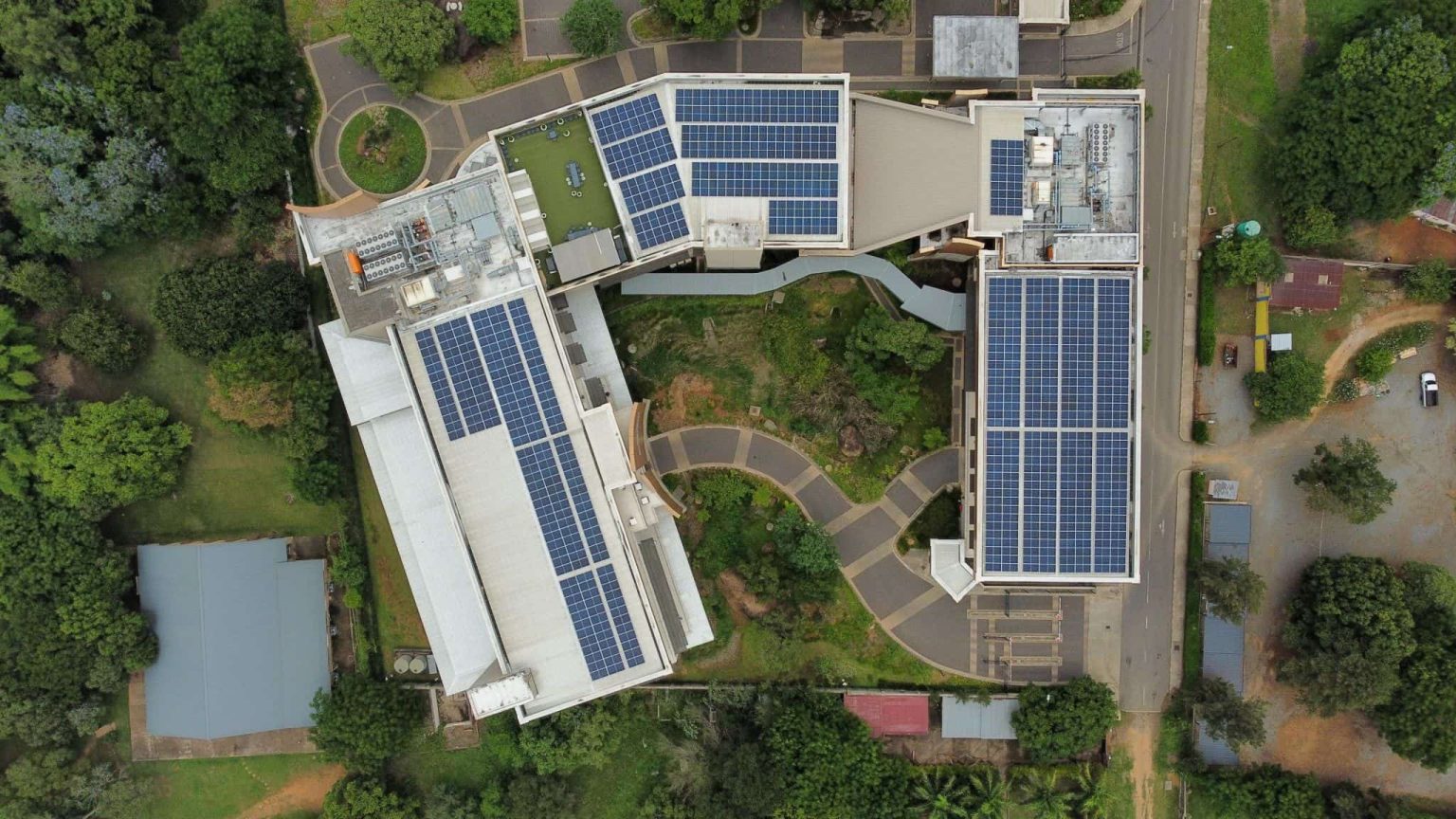
The LIVOLTEK[9] case study reports the successful launch of the “Eswatini Revenue Service (ERS) Micro-grid EPC Project,” delivered with involvement from Hexing Group[10] and Hexing Electrical South Africa (Pty) LTD[11]. [12]
According to the same project case study:
ERS led the project as the client/host organization. [12]
Hexing Electrical South Africa (Pty) LTD served as the general EPC contractor (engineering, procurement, and construction). [12]
Livoltek supplied core new-energy components—specifically including the PCS, BESS, solar inverters, and an energy management system (EMS)—to form an integrated microgrid. [12]
The delivery is positioned as a milestone for Hexing in low-voltage microgrids and described as Hexing Group’s first microgrid initiative in Eswatini. [12]
Notably, Eswatini has implemented microgrid/mini-grid projects before (for example, a 2020 stand-alone mini-grid pilot is documented for rural service). [13] What distinguishes the ERS project is its facility-focused, low-voltage, grid-interactive design integrating rooftop PV, battery storage, and a pre-existing diesel generator into a controlled microgrid for continuity and cost optimization. [12]
The operational challenge at ERS: outages, diesel dependence, and rising costs
ERS is described as a major electricity consumer, using up to 110 MWh per month. [12] The project case study frames the primary challenge as frequent power instability and outages—stating that power cuts can last up to four hours—creating operational disruption and requiring backup generation to maintain essential loads. [12]
In response to outages, the case study reports ERS relied on diesel generators, resulting in monthly diesel consumption of over a thousand liters—an approach that raises both operating expenditure and environmental burden. [12]
This pattern (grid interruptions → generator runtime → higher fuel costs and emissions risk) is common across many commercial and public-sector sites operating in constrained grid environments. Batteries and microgrid control systems are frequently deployed specifically to reduce generator hours and improve continuity of service during outages, while also enabling economic operating “modes” when the grid is available. [14]
Microgrid architecture and technology stack
The solution implemented for ERS is described as an AC-coupled microgrid, integrating rooftop photovoltaics, battery storage cabinets, a PCS (power conversion system), and an EMS, while also integrating with the client’s existing diesel generator. [12]
In AC-coupled configurations, PV generation is converted to AC power, and battery charging can involve converting AC back to DC—contrasted with DC-coupled systems that charge batteries directly from PV DC output. This basic distinction is described in technical guidance materials used for off-grid/public-facility solar system deployment. [15]
The ERS project’s named core equipment includes:
- EMS (Energy Management System) (self-developed, per the case study) [12]
- 500 kW PCS [12]
- 5 × 225 kWh BESS units (total battery energy stated as five 225 kWh systems in the case study; a separate Livoltek South Africa update also describes a 1.125 MWh battery bank) [16]
- 6 × 60 kW grid-tied solar inverters [12]
The system is described as grid-connected on the 0.4 kV low-voltage side. [12]
From a control and oversight perspective, the EMS is central. In microgrids, an EMS is commonly defined as the layer that manages control, operation, and monitoring across distributed energy resources and relevant grid/load assets. [17] The ERS case study aligns with this concept, describing comprehensive monitoring and intelligent control of microgrid equipment through the EMS platform. [12]
How the system operates: resilience plus day-to-day optimization
The ERS microgrid is framed as doing two jobs at once:
First, it improves continuity of power during grid outages through seamless transitions. The project case study states the system supports black start functionality and achieves seamless switching between grid-connected and off-grid states, helping essential loads remain stable during outages. [12]
These transition capabilities are consistent with how microgrid controller requirements are commonly structured in standards work: transition modes may include unplanned islanding, planned islanding, black start, and reconnection—each requiring specific control and dispatch logic. [18]
Second, it supports economic operating modes when the grid is available. The case study states the EMS enables operating modes including peak shaving, energy arbitrage, and reducing transformer demand, which are classic value streams used to improve energy utilization and manage electricity costs. [12]
These modes map directly to well-established battery storage value streams. For example, battery storage is widely described as enabling: - Demand charge reduction (using stored energy to reduce demand charges), and
- Energy arbitrage / time-of-use shifting (moving consumption from on-peak to off-peak periods). [19]
In plain terms, the ERS system is designed to: - prioritize solar energy when available,
- store energy for later use when it is most valuable, and
- reduce dependence on diesel generation by coordinating PV + battery dispatch with the site’s backup generator. [12]
Forecasted generation and expected economic and sustainability outcomes
The case study provides specific energy production forecasts for the project:
551.8 MWh expected in the first year
12,609.7 MWh expected total generation over 25 years
504.4 MWh average annual output (as stated in the case study) [12]
In addition to energy yield, the project is framed around reducing generator runtime and fuel usage by combining solar PV and energy storage (while retaining the diesel generator as an integrated resource for resilience). [12] The case study explicitly links this design to reduced reliance on diesel generation and lower operational costs. [12]
The reported on-site baseline reinforces why this matters: ERS’s reliance on diesel backup during outages is described as exceeding one thousand liters per month. [12] Reducing generator hours through PV and batteries is a common pathway to lower fuel costs and emissions exposure, while improving reliability for mission-critical operations. [14]